SEPTEMBER 2026
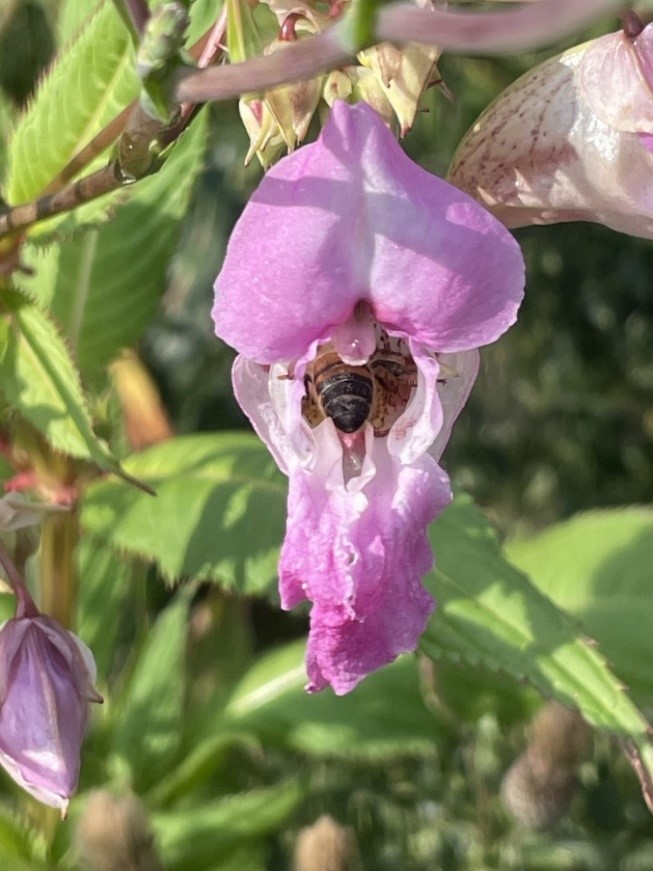
Well at last we are having some rain, thank heavens. My bees definitely suffered in the hot weather, stores went backwards, and egg laying slowed down in some cases. I have been feeding a couple of my colonies to make sure they can put enough stores down for the winter. Himalayan balsam continues to be evidenced and I saw some heather honey in some of my colonies; most of Crooksbury Common is brown and crispy instead of the sea of purple that it normally is. I guess there must be some heather around the various ponds and the river that is delivering some nectar! Has this been the worst beekeeping year ever – high winter losses then extreme summer heat? We can only hope for a better year next year.
My inspections are primarily to check the queen is laying and they are building up sufficient stores. Once I am satisfied I have the answers, I close them up again, so as not to disturb them further.
My honey crop is not great – just one of my colonies has delivered some excess honey, which I am in the process of extracting – they have plenty left for themselves. I have just put in varroa trays – I am only going to treat if they need treating, so let’s see!
All that and I am working my way through the beeswax pile for rendering and a pile of supers that need scraping, scorching and storing – it is like gardening, never finished! My shed also needs a sort out, how did it get so untidy!!!!
What is going on in the hive?
The queen will be laying still but these bees will take the colony through the winter. Winter bees have well developed fat bodies, enabling them to live much longer than the summer bees.
The colony should be storing honey at the margins of the brood box as well as in the supers for winter. My bees are still working really hard now that it is a bit cooler – flying until late in the evening, as long as it is light and warm enough.
Make sure that your hives are set up to succeed – disease free, low varroa mite numbers, plenty of stores, large enough in numbers to keep the colony going. I always leave them a super of honey as that is the best food for them, but if they don’t have enough honey, supplement their stores with syrup.
Check the larder
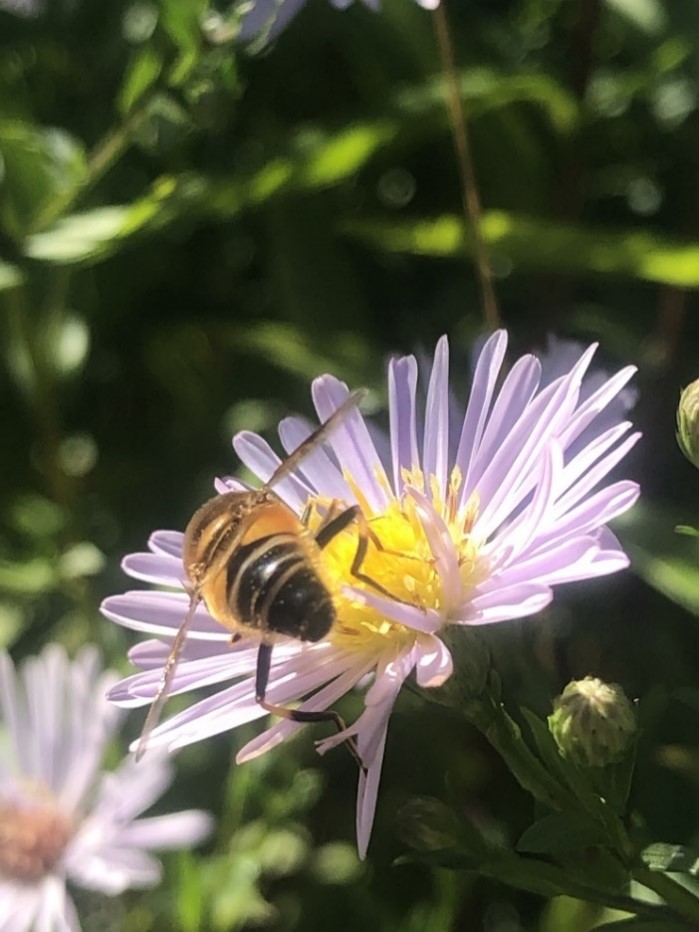
In the drought it is interesting to see what plants still survive. There is some colour in my garden from Rudbeckia and Michaelmas daisy, but the star of the show is Himalayan Balsam by the river which is bringing in dividends for my bees. I hope yours are near some too! In the meantime, the ivy is coming along and will come into flower in the next couple of weeks. I enjoy watching the huge variety of pollinators on the ivy when it is in flower – and I will be keeping my eyes peeled for Yellow-Legged Hornet of course.
Enjoy your bees!